
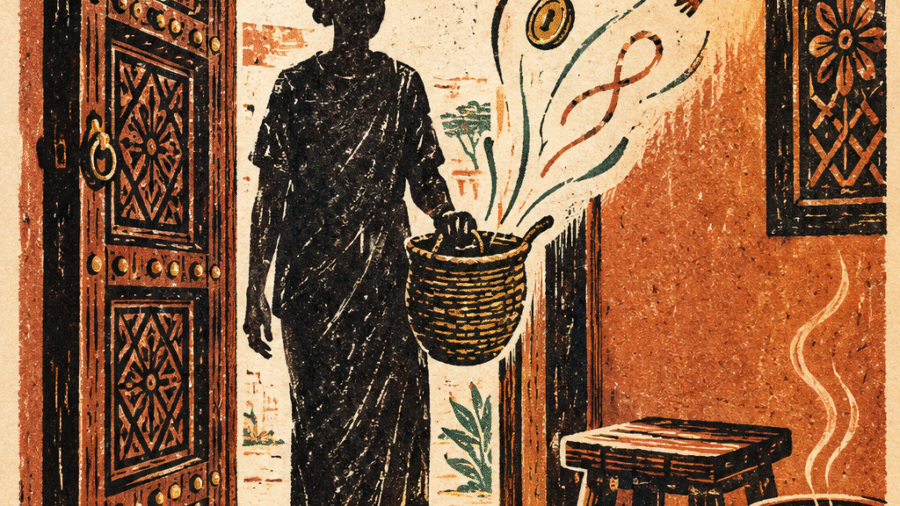
“Mgeni njoo, mwenyeji apone.”
Our elders left us wisdom that remains surprisingly relevant in business today.
Translated from Kiswahili, the proverb means:
“Let the guest come, so that the host may heal or prosper.”
What did our elders know about a guest that made this truth worthy of becoming a proverb? Perhaps they understood something many businesses still overlook today: visitors bring more than their presence. They bring opportunity, learning, relationships, growth and sometimes even transformation.
If that is true of guests in our homes, could the same be true of customers in our businesses?
Maybe we need our own modern version:
“Mteja njoo, mwana biashara afaulu.”
“Let the customer come, so that the businessperson may prosper.”

It sounds funny, but it carries a powerful truth.
Every business is built with the hope that someone will walk through the door, call the number, send the email, visit the website or enquire about a service. We invest our ideas, time, money and energy because we believe we have something valuable to offer.
Yet our success is ultimately tied to the people we serve.
For us to pona (heal), faulu (prosper) and grow, we must genuinely consider our customers.
Here are a few questions worth asking:
1. What services are we offering to our customers?
The answer should be more than a list of products. We should be solving problems, meeting needs and creating value that matters to people’s lives.
2. Do we and our teams know and understand our products and services?
If we expect customers to trust us, we must first understand what we offer and how it benefits them. Confidence comes from knowledge.
3. What have we done to make our customers feel seen and listened to?
Every customer wants to know that they matter. Listening and understanding often creates loyalty long before a sale does.
4. What have we promised our customers?
Promises create expectations. Trust is built when we consistently deliver on those promises, especially when it is difficult.
5. What experience do customers have when they interact with us?
Long after a customer forgets the price, they often remember how they were treated. Their experience can be our greatest competitive advantage.
Let us consider Maya Angelou famous quote” I have learned that people will forget what you said, people will forget what you did, but people will never forget how you made them feel.”
Our books are opened and closed based on the effort we put into our interactions with our customers.
Mgeni njoo, mwenyeji apone is not merely a proverb to admire. It is a principle to practise.
How much of our advancement and prosperity depends on what we do for the customer?
Other than a customer’s money, what else do we hope to receive?
We hope they will return.
We hope they will become loyal.
We hope they will recommend us to others.
We hope they will trust us with more of their business.
We hope they will become ambassadors for our brand.
The truth is that customers often bring far more value than the transaction itself.
And that brings us back to the wisdom of our elders.
A guest was never just a guest. A guest brought news, relationships, opportunities, trade, knowledge and connection. The arrival of a guest represented possibility.
The same is true for customers.
Every customer who walks through our door arrives carrying something valuable. Sometimes it is revenue. Sometimes it is a referral. Sometimes it is feedback that helps us improve. Sometimes it is a relationship that lasts for years.
So, what shall we offer our customers in exchange for our prosperity?
Not merely products.
Not merely services.
But attention.
Respect.
Competence.
Reliability.
And genuine care.
Because if our prosperity depends on customers, then customer experience is not a department. It is not a slogan. It is not a once-a-year initiative.
It is a daily commitment.
Perhaps the proverb deserves a place at the entrance of our businesses after all.
“Mgeni njoo, mwenyeji apone.”
And every time a customer walks in, we should remember:
Our success begins where their experience does.
Leave a Comment